
Free Tuition?! A step towards better medical education!
NYU recently joined the ranks of few other medical schools that offer their students reduced loan burdens and an even smaller, elite group of medical schools that offer completely free tuition. This is fantastic news for medical students, and we can only hope that other institutions begin to offer similar deals to their students!
Medical education is expensive. While I cannot comment on exactly the resources it takes to train a competent physician, I imagine it's a lot.
NYU recently joined the ranks of few other medical schools that offer their students reduced loan burdens and an even smaller, elite group of medical schools that offer completely free tuition. This is fantastic news for medical students, and we can only hope that other institutions begin to offer similar deals to their students!
Medical education is a huge business and is expensive. While I cannot comment on exactly the resources it takes to train a competent physician, I imagine it's a lot. Medical liability itself must be particularly expensive in our litigious society, but also the costs to hire lecturers and practicing physicians to teach must be significant. The large administrations, bureaucracy, and facilities at many training institutions also have significant costs that someone needs to pay. So to have NYU, in one of the most expensive cities in the world, take a bold step to free their students from the shackles of educational debt deserves tremendous credit!
“To not consider the financial or economic consequences of your career decisions is short-sighted.”
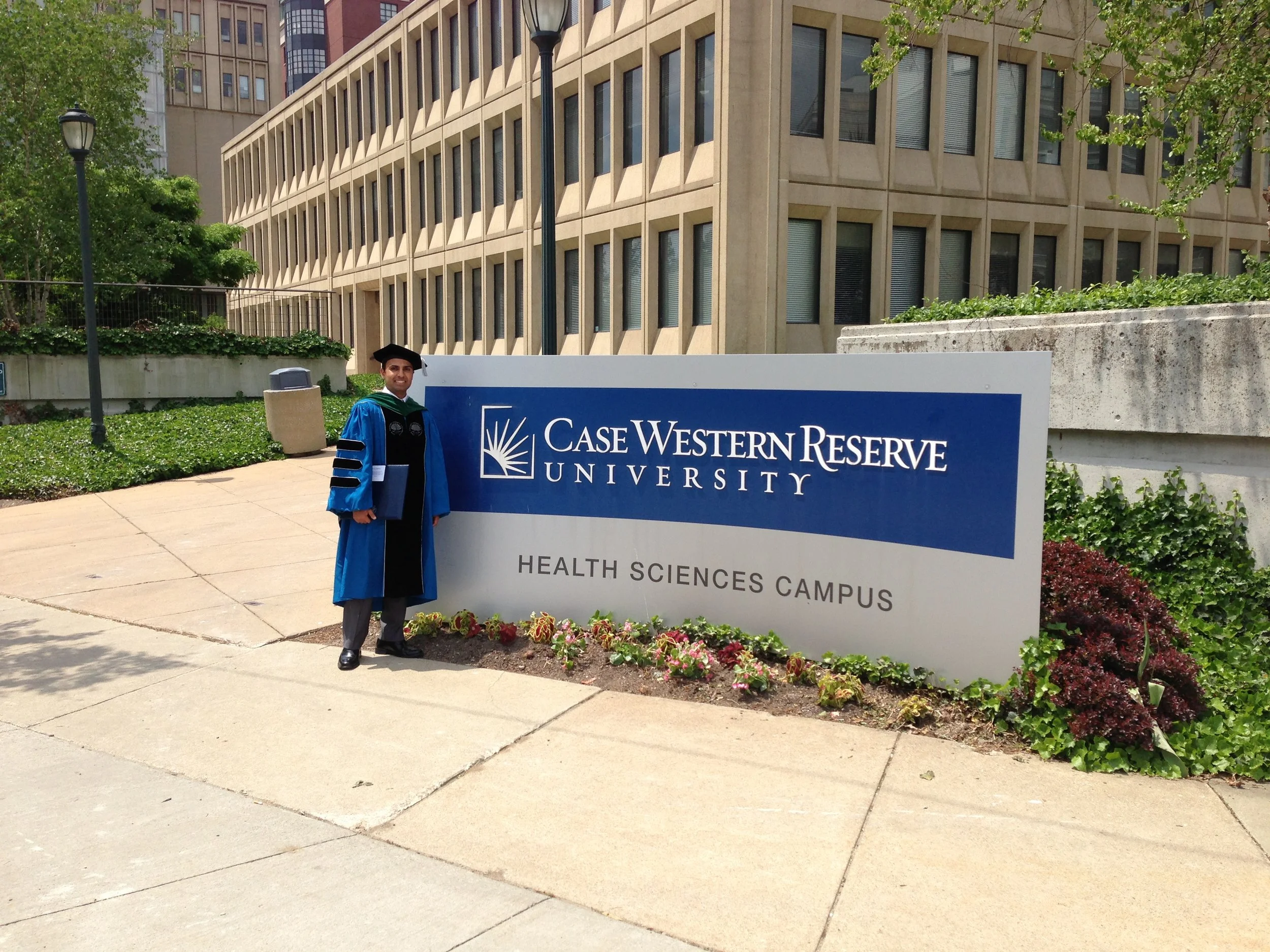
I had a wonderful experience in medical school at Case Western in Cleveland and wouldn't trade it for anything. I was taught by the best, had access to amazing faculty, unparalleled opportunities, and was able to work/learn along side the most wonderful and brightest people. Yet looking back, I do wonder if the debt was worth it. Over $200,000 in medical education debt, to which I have not made a dent being on a trainee's salary for the last 5+ years. In order to keep up with the interest rates and even touch the principal, I would have to make payments of more than ~$1,500-$2,000 per month in after-tax dollars... on an average pre-tax salary of ~$55,000-$65,000 per year. The math just doesn't add up. This also means I haven't been able to save for retirement (and thus have lost out on a decade of compounding interest growth), create a safety-net fund, save for a house, plan for future child expenses... all those things that one should really begin in their late 20's and early 30's.
My mentors and faculty would say that you should choose a field solely based on interests, while ignoring the potential reimbursements as a specialist. This is foolish. To not consider the financial or economic consequences of your career decisions is short-sighted. It makes little financial sense to not be a specialist with potential for higher reimbursement when you have so much accumulated debt. And I wonder if this factored into my class' residency decisions, where a significant number chose specialties like radiology, orthopedics, etc. Even among those that chose internal medicine or pediatrics, anecdotally, it seems most continued to further specialize. I wonder how finances/economics played into our decision-making, even on a subconscious level.
“A lower medical education cost gives you the freedom to truly make the decision based on your passion. ”
Healthcare Implications: By reducing the debt burden, more people will consider going into medicine in the first place. It removes a significant financial barrier in order to attract the brightest students, regardless of their ability to pay. This benefits everyone. More trainees may also consider primary care, which could certainly use more physicians. In the long-term, a stronger primary care force would help maintain a healthier population and reduce overall costs.
“If you work hard and score well on standardized testing, you will still likely get the residency you want, regardless of how much tuition you paid.”
Student Implications: Students have a tough decision to make when it comes to where to go and what field to choose. I would argue that it's better to go to an institution that you feel is a good fit AND has the lowest costs. Accrediting organizations like the LCME, AAMC, and AOA have stringent requirements, so most medical schools are pretty good. If you work hard and score well on standardized testing, you will still likely get the residency you want, regardless of how much tuition you paid. A lower medical education cost gives you the freedom to truly make the decision based on your passion.
There's little I would change about my journey as that is what led me to this moment. It's important to remember: Fulfillment in medicine comes not from the remuneration, but instead the intellectual challenge and gratification of helping another human being. If you're solely interested in money, perhaps a career in finance or starting a business is better. But this debt is a real burden. Physicians are certainly well compensated once they finish all their training, but these salaries are deceiving when you take into account the opportunity costs, length of education, shortened careers, lack of retirement investments, and lack of general savings. Previous generations of physicians may have done extremely well financially, but the economic reality today is much different.
Medical education benefits greatly from reduced physician debt burdens. Students can focus on learning and practicing medicine, instead of worrying about crushing debt. The brightest, most talented students may also be more likely to consider academic careers, where reimbursements are lower. Having happier, financially secure physicians to teach and lead future generations of physicians creates a positive cycle that benefits not only future students, but also patients.
Kudos to the likes of Cleveland Clinic, NYU, and the few other medical schools that have found a way to reduce this burden on their students! It's a HUGE upfront cost, but an investment that will lead to more competitive and diverse applicants, happier trainees, less burdened physicians, and ultimately better healthcare for everyone.

Beyond Burnout and the Business of Medicine
This week in JAMA, Dr. Catherine Humikowski penned a wonderful article about physician burnout that I think is worth a read. Over the last few years, we've started to see research and personal exposés on physician burnout. We have seen in the news the tragic stories of suicides across all levels of physician training from medical school to late career physicians. In response to these events, there have been more resources, usually in terms of counseling, available to trainees. There has also been a greater acknowledgement that mental health is critical to a physician's well-being, and therefore by extension, our patients' well-being. However, this hardly seems enough as we continue to hear what our colleagues and current trainees face.
This week in JAMA, Dr. Catherine Humikowski penned a wonderful article about physician burnout that I think is worth a read. Over the last few years, we've started to see research and personal exposés on physician burnout. We have seen in the news the tragic stories of suicides across all levels of training, from medical school to late career physicians. In response to these events, there have been more resources, usually in terms of counseling, available to trainees. There has also been a greater acknowledgement that mental health is critical to a physician's well-being, and therefore by extension, our patients' well-being. However, this hardly seems enough as we continue to hear what our colleagues and current trainees face.
We choose a medical career not because of a business decision, but rather we hope to make a difference in others' lives. We are, and hope to continue to be, intrigued by the science, restored by the humanity, enlightened and entertained by our patients, challenged in every aspect, and driven to perfection. Yet we cannot escape the reality that the system is broken. Bureaucracy and administrative requirements dictate our practice, and profits have become the underlying driver of the field.
“Medicine could stand to drop the attitude that we are somehow immune to the same basic physiology we have devoted our lives to understand.”
One great point that Dr. Humikowski highlights is that, "Burnout infers insufficient energy from within, as if one's spiritual well were too shallow, or constitution too weak." Like most residents now, I sat through a lecture in my residency every year on burnout. The conclusion was that we need to be more resilient, that indeed the fault lies within us for these overwhelming feelings. It fails to acknowledge the systemic or institutional issues that drive physicians to burnout. Just as Dr. Humikowski discussed in her article, we too were lectured on the importance of self-care, yet we face the reality of actual institutional policies contradicting this very notion. I recall in my own residency the challenges and fear I had to request a few hours off to see a doctor or dentist for my own health. How many residents out there encounter this kind of anxiety? Do training programs have actual defined policies in place? As residents, we genuinely strive to provide the best care we can to best of our abilities, often to the detriment of our own health. Dr. Humikowski mentions, "If any industry should care for the caretaker, it's ours. But we have not done it well." I, and countless other physicians who leave the profession for other fields, couldn't agree more.
There is no simple solution to physician burnout, but progress needs to be made, and large healthcare institutions that train and hire physicians have an opportunity to be at the forefront. Taking cues from other large corporations that have improved productivity and employee satisfaction, residency programs and large hospitals can offer (as Dr. Humikowski mentions) paid sick leave, child care, and maternity/paternity leave. In addition, they should also provide great and affordable health insurance coverage (I've trained/worked at literally the best institutions in the country, that provided the worst, most complex health insurance), a competitive 401K (to help make up for a decade of lost earnings), and student loan relief (the average physician graduates with over $190K of debt). Although capped at 80-hour work-weeks due to ACGME requirements, the reality is that many residents continue to approach nearly 100-hour work-weeks. How about offering pay commensurate to hours worked?
It's important to acknowledge that medicine is a business. On the business side, this means more costs and lower short term profits, which is why there will be a reluctance to make substantial change. Instead, trainees and physicians will likely be offered more online modules, counseling, and seminars because talk is cheap. Real progress requires a strong will and upfront capital investments. Yet these investments will pay off in the long-term as more people choose the profession, become more productive, and opt to stay in it for as long as possible. I would anticipate with some common sense changes, burnout would be less. For substantial changes to be made, trainees and physicians need to understand how business decisions drive medicine.
At the end of the day, Dr. Humikowski says it best, "Medicine could stand to drop the attitude that we are somehow immune to the same basic physiology we have devoted our lives to understand. We must cultivate balance around us and among us, not just within us."
Why Medicine? (Part 2)
The allure for life sciences had first taken its roots early in my childhood when I took a summer course in molecular biology. This was the first lesson that truly ingrained in me the significance of scientific curiosity, logical inquiry, and academic integrity at a very early age.
The allure for life sciences had first taken its roots early in my childhood when I took a summer course in molecular biology. This was the first lesson that truly ingrained in me the significance of scientific curiosity, logical inquiry, and academic integrity at a very early age. Eventually, the quest to equip myself with research training and to satisfy my own scientific curiosity led me to work with in the field of biomedical sciences, where my research focused on better understanding heart disease by studying the mechanisms that control the contractions and development of smooth muscle and cardiac cells. Working in an academic research environment has been extremely challenging, yet equally gratifying. In particular, the arduous workmanship and critical thinking required to carry out this research has undoubtedly prepared me for the challenges in pursuing medicine. Furthermore, the commitment and the passion of my colleagues at unlocking the mysteries of vascular development for the betterment of life have been inspiring and have influenced me to pursue a career that incorporates cutting-edge research. The discoveries and innovations stemming from research institutions are the very foundation of the therapies that alleviate pain and suffering.
“Nothing great in the world has ever been accomplished without passion,” said German philosopher Goerg Hegel. I believe that if one’s life is devoid of even a single passionate cause, then it amounts to a life lived pointless. History has shown us that passion for a cause has always been at the foundation of a major renaissance in society. Martin Luther King, Jr. fervently fought for civil rights, while the Mahatma Gandhi passionately labored and won independence for masses in India. Similarly, passion for the freedom of his people kept Nelson Mandela to battle apartheid fearlessly for decades in South Africa. History has also taught us that passion breeds other ideal traits in a person. It inspires one to look at serious problems in unique inventive ways and find a solution to vigorously pursue. For example, non-violence was the pioneering course that all three leaders above had pursued to vanquish social injustice. For me, battling the social injustice in healthcare delivered to our communities is of paramount importance and a guiding light for my medical career.
Why Medicine? (Part 1)
Why did I choose medicine? This question constantly rings in my ears as the profession enters the potential of financial ruin, brought largely by politicians, administrators, and sheer bureaucratic ineptitude. So why did I choose medicine and why do I stick with it?
Why did I choose medicine? This question constantly rings in my ears as the profession enters the potential of financial ruin, brought largely by politicians, administrators, and sheer bureaucratic ineptitude. So why did I choose medicine and why do I stick with it? I constantly have to think back to my own experiences that kindled my first love of the profession. No matter the challenges physicians will face, I will always remember how I got hooked.
Etched in my memory forever are the visions of a ten year old boy bullying, yelling, and even physically abusing some younger kids on the grounds of the dilapidated HIV/AIDS shelter in Salvador, Brazil. What frightened us volunteers the most was that he would not only spit and urinate in the food bowls of younger children, but he would also pick at their scabs and open up bloody wounds. He may not have known the consequences of his actions, but I think that he may have intrinsically understood the finality of his condition and took out his rage on the other children out of despair, fear, or both.
For me, this child also symbolized the failures of our society. Even with all of our intellectual and financial resources, we seem to have failed some of our most vulnerable and dispossessed. Before volunteering in Salvador that summer, I had spent three weeks in the citadel of the privileged, Cambridge University, indulging myself in intellectual debates that ranged from contemporary world politics to the anatomy and functions of the brain. Only after spending time in Cambridge and Salvador could I truly grasp the enormity of the divide between these two worlds: the world of the fortunate few and that of the destitute. The chasm between these two worlds is so profound that only a person with the vision of a world leader, compassion of a physician, and the curiosity of a scientist could even begin to bridge the gap. I want to be that person, someone who embodies these traits and has the moral courage to challenge the status quo. I want to become an agent of change for the most underrepresented segments of our society.

Internally Stimulated
The author Anna Quindlen once said that “If your success is not your own terms, if it looks good to the world but does not feel good inside, it is not success at all.” Unfortunately, there is not a single all-inclusive definition of success for every one, or for any given vocation, because success is a very personal and relative concept. The definition of success even varies within the same profession, and is different for a person at various stages of his own life.
The author Anna Quindlen once said that “If your success is not your own terms, if it looks good to the world but does not feel good inside, it is not success at all.” Unfortunately, there is not a single all-inclusive definition of success for every one, or for any given vocation, because success is a very personal and relative concept. The definition of success even varies within the same profession, and is different for a person at various stages of his own life. In that respect, this measure for success as offered by Anna Quindlen is most intriguing.
Throughout my academic career, grades, research, and quality of extra-curricular activities certainly created the foundation for success. I also took pride in being associated with some of the most influential and interesting faculty on campus because of my association with academic journals. These things gave me a sense of happiness that I thought came only through society’s definition of success.
However, as I embarked in this life long journey of healing, public service, and altruistic endeavors, I find myself redefining myself in the image of Anna Quindlen as a successful person. I still believe that achieving and maintaining academic excellence and superior medical knowledge as a physician is imperative. However, now the underlying motivation is different. Now scholastic excellence is measured through my own satisfactions stemming from mastering the subject material for the sake of patients’ good, and through my inner convictions about becoming a great physician. I also think that a passion aimed at innovative scientific inquiry will be a measure by which I would judge the quality of my tenure as a physician. Whether a change in hospital efficiency or a small research success that contributes somehow to the larger cause of easing suffering, it will be sufficiently gratifying for me.
Some other measures- personal integrity, ethical behavior, and empathy for the least fortunate- also seem to percolate to the forefront. As a physician I will continue to assess success through my ability to cultivate a sense of love for humanity, which I am sure will be followed by a flourishing love for the art of healing.